Music tames the Savage Beast. This Metro Goldwyn Mayer label was supreme. Let’s play a stack of some 45’s today …shall we?


MGM Records began in 1946 –when the King of Beasts started spinnings his head in circles…

The “other” MGM King. Of all the artists you would expect on the MGM Label, Elvis Presley was not one of them. In 1954, he signed his first contract with Sun Records.The next year, RCA Records took on his record contract.

This moment was connected to the MGM label, Apple would become The Beatles label.

2013- The British Invasion Flag flies above Sony, Stages 27/29, formerly MGM Studios.
Take a taste of this. Turn up your Marantz Stereo and light the living room up in colorful patterns with a sound reacting Light Organ… if your hip!
Artists signed aboard include…
Louie Armstrong, Fred Astaire, Gene Kelly, Mickey Rooney, and Tony Bennett graced the stage. Leslie Caron, Richard Chamberlain, and Maurice Chevalier added to the charm. The Cowsills, Bing Crosby, and Jimmy Durante entertained the masses. Billy Eckstien, 5 Man Electrical Band, and Eydie Gorme mesmerized the audience. George Hamilton, Jack Jones, and Hugh Masekela captivated listeners. Donnie Osmond, Mel Torme, and Eric Burdon and War thrilled fans. Hank Williams, Tony Sheridan and The Beatles—also known as “Beat Brothers”—and Three Dog Night were unforgettable. This part of the studio specialized in sounds and soundtracks. Over time, the sounds faded away. They disappeared like the studio itself.

Three Dog Night, an All -Time Favorite of mine, seen here in 1972, on float in the Rose Parade.
Put -some “Whiskey in Your Water” and continue…
Never too late to cherish an iconic MGM experience, A studio most famous for legendary musicals…Many large bands continued on, under RSO Records, Robert Stigwood’s label. The Bee Gees, Peter Frampton, Earth, Wind and Fire, Billy Preston etc, performed on the MGM backlot in 1977. That year became my own “Rocker” on the set of SGT. Pepper.
This label was originally developed for releasing MGM Soundtracks from MGM Films. It quickly evolved to include several musical genres. Nevertheless, it maintained an accent towards Country Western. MGM’s western collection is interesting because it includes western films, trains, and carriages. There are also horses, western streets, and legendary musicians influenced by country artists.
MGM created the old west right here in Culver City. They shuffled in Singing Cowboys. They developed and delivered music for this studio to market.
This MGM label took off as a major player. Its competitors in the early 50’s were Columbia, RCA, Decca, Capital, and Mercury. MGM manufactured their cataloged at the studio more legendary for films. the only label besides Columbia that are dual film/records. But MGM forever will be-King of Beasts!
In the mid seventies, I was found at this studio on a daily basis. I was part of this Rock and Roll landscape. Polygram took over this label as MGM divested all its assets. The 1970 MGM auction was the beginning of the end of MGM as we knew it.
The 50’s and 60’s
Connie Francis, Hank Williams and Conway Twitty led the way for record sells. 45’s turned into ten inch 33-1/3. That brought on album covers, and artwork, instead of paper envelopes with vinyl wrapped inside. In 1961, MGM bought Norman Granz’ Verve record label and MGM became-A rock label. The Righteous Brothers, The Velvet Underground, and The Mothers of Invention.
These artists were not happy with MGM’s censorship, and often released content without artist approvals. Welcome to the world of MGM labels and holding stables. Actors and films came before musicians and tunes. Studio higher ups gave them all a take it or leave it response. Censorship ruled supreme as Rock Music was taking off. In the mid 60’s, MGM distributed a new Kama Sutra label, The Lovin’ Spoonful signed on. Acid Rock competed against Vietnam protests. Tough times make for great music, L.S.D was a music gateway. MGM was buying artists from other labels to hedge the future. This label evolved from singing cowboys to singing hippies!
MGM bought in the the colorful decade to come by signing Eric Burden and The Animals. But profits plunged. MGM Records lost 18 million dollars to close out the 1960s. Records in music stores were unsold.
The 70’s–I became a member of that culture…
Nothing funner than L.S.D on the MGM backlot while listening to Acid Rock, just sayin!
MGM was busy auctioning off their soul right after Woodstock changed the music world forever in 1969. One entity was headed upwards while the other was sinking below the surface. MGM executive Mike Curb, a future Lt. Governor of California, fired 18 groups who publicized …the use of drugs!
“I couldn’t be fired” since I was just a Trespasser with his own personal…Hole in the Fence. I counter cultured and embraced escapism- literally and figuratively. I was a rebel with a cause who did not want to end up in Vietnam. President Nixon agreed and praised Mr. Curb. for his unrelenting attitude against drugs. Drugs became a huge item going ahead in Hollywood. Stars were using drugs. Cocaine use was an issue at every studio. When I began my long career at Universal, several major stars would take “powdered lunches.” Dirty stories for another time. Alcohol and cigarettes were no longer enough.

My hero, WW2, veteran, Lee Marvin. The leader of The Dirty Dozen. In the 80’s, “Maggot” Telly Savalas could be found at Universal. He was often in a limo, at Telly’s Bar at the Sheraton Universal. A big mirror was inside, driven around the property. Prefabbed “white lines” were also inside. The studio that promoted drug films, such as Cheech and Chong, hosted a wrap party on Stage 4. It was a legendary drug fest. Drug use escalated effecting in someway almost every star we had on the lot!
As I was experiencing MGM first hand in the early 70’s, MGM switched to “bubblegum” acts. Sammy Davis Jr, Petula Clark, and The Osmonds. These successful performers helped stabilize MGM financially.
In 1972, a conglomerate of Dutch /German Polydor and and Phonogram was buying into the U.S market. Polyvgram was now the MGM record label. The merger failed and was reduced to going forward with soundtracks from MGM films.
The 80’s
After the merger of Metro, Goldwyn, Mayer Inc. and United Artists in 1982, the label discontinued all together. For me, I became employed at MGM. My dreams came true” and I worked for the last MGM entity still using the MGM logo. MGM Film laboratories was the final MGM department identified as MGM.
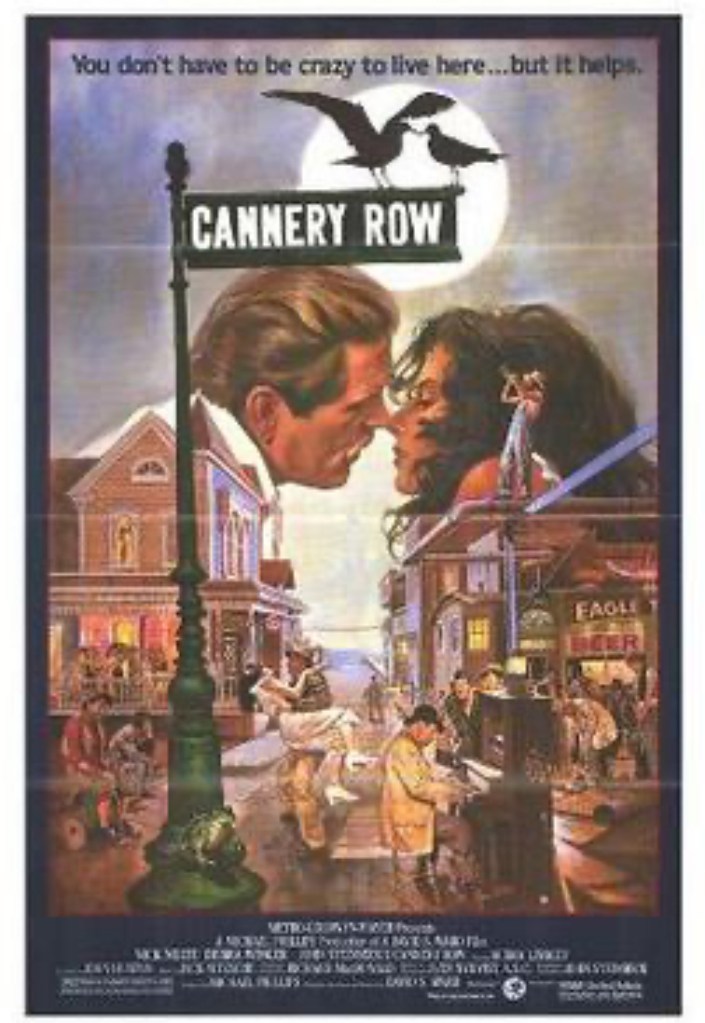
My job took me all over MGM Lot 1, Job description” Reel Router.” The processing of film is very involved, from waxing to reduce projector noise, editing of course, and color corrections. Cannery Row was one of our films, starring Nick Nolte, Deborah Winger, and John Huston. Based off a John Steinbeck novel. Almost entirely shot with clever Art Direction using MGM’s main lot. the only lot still standing.

In 1972, Raquel kicked ass dressed like this, in 1982 she” kicked ya and flipped ya.” She won a match race that paid her –extremely well…


I wanna tag team with her…I’m a great skater! I watched Roller Derby, L.A Thunderbird’s, The Olympic Auditorium. Announcer, the legendary Dick Lane.
During the making of Cannery Row, a lawsuit occurred involving the original casted star and MGM. Additional legal entanglements came under scrutiny, focusing on stolen MGM raw stock film. It was being hijacked and resold to Hollywood film labs. The F.B.I arrested the perpetrator “on set.”
Meanwhile back in the MGM lab, I walked in on a pile of cocaine in the “film timers” studio. The color correction involved magenta, cyan, and all things color. It took place in a state of the art post production facility. Expensive consoles corrected the 35 millimeter prints based off the timers recommendations. A huge movie screen completes the interior of this facility. Next to a basket of fruit and tasty munchies was a pile of “blow.”
Cocaine became as prevalent at “craft service” as snacks themselves. no one hid it, you were welcomed by it. An MGM security guard named George Barner was hired to catch me a decade ago. He ran a sting operation to bust employees. He used a famous Hollywood watering hole across the street, still operating as a bar today, The Backstage.
CHiPs Television– wasn’t safe, either. The star, Tom Reilly, was arrested for drug use and relieved of duty. End off Watch, end of his involvement in that hit series. MGM then started searching star dressing rooms when actors on set. MGM Studios would disappear. It would fade to black. Nonetheless, the Acid trips and drug use would continue. I would experience much more at Universal.
The Who “Long Live Rock” was a song and signal of more to come…
Written and lived by…Donnie Norden

 Phantom of the Backlots
I know this post is a year old now, but I am just getting to the expansive number of posts at this time. I think I shared my Elvis Presley story privately with Donnie, but here goes anyway. I started working at MGM in July of 1977, the day after I turned 18, on the set lighting rigging crew. I was there probably about a month when in August Elvis passed away. In my 18 year old mind it was unfortunate, but kind of a remote issue for me. Not for the other workers on the lot, though. A funk kind of permeated the lot that day. There was a man about 40, named Les, on my crew and he just broke down in tears when he heard the news. I started to realize that Les and many others on the lot had worked with Elvis and loved and admired him. Elvis was very much known for his generosity to the people who worked with him and Les and others around had been recipients of Elvis’ generosity. That day in the summer of 1977 showed me that there wasn’t as much separation between the cast and crew of the productions as I would have thought in those beginning days of my Hollywood career. As a matter of fact, I married the daughter of an actress on the highest rated tv show in America, that shot at MGM, not 10 years later.